Web Analytics and Why is it so important?
Using Web Analytics to Your Advantage: Understanding Your Online Presence
These days, the world of internet changes so quickly that having presence on the internet is no longer optional. It’s important to understand how people are using your online website/app, whether you operate a small business, work in marketing, or simply want to know what’s going on. Web analytics can be useful in this situation. It provides a more accurate understanding of what is going on behind the scenes.
What is Web Analytics ?
Web analytics is basically the practice of looking closely at what’s happening on your website and making sense of all that activity. It’s about collecting and sorting through data that shows where your visitors come from, what they do once they land on your website, how long do they stick around, and whether they complete the actions that they started or not. It also gives insight into things like audience demographics and behaviour and how well the site performs from a technical point of view—all of which helps you understand how people use your site. It covers the entire customer journey as follows:
1. Awareness Stage: New Visitors.
2. Consideration Stage: Pages Viewed, Bounce Rate.
3. Decision Stage: like Add to Cart ,filling out forms.
4. Purchase Stage: Conversion Success Rate.
5. Post-Purchase Stage: Repeat Purchases, Customer Feedback Surveys.
6. Retention Stage: CLV(Customer Lifetime Value), Referred Visits.
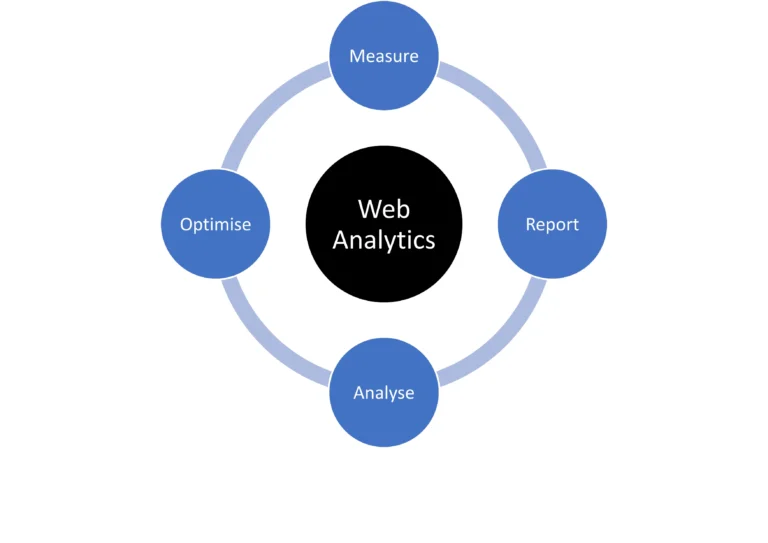
Web Analytics Solutions for Business Optimization
Attribution Modeling
- Helps you figure out which marketing channels actually lead to conversions.
- Shows you which campaigns are performing well, allowing businesses to fine-tune marketing plans, allocating budgets precisely, and see better returns and stronger conversion rates.
Customer Feedback and Survey Analytics
- Gives a more complete view/picture of what customers/clients appreciate, what they actually need, and where they expect to get better things or improvements/changes.
- Makes it easier to develop products/services by resolving genuine/real consumer problems, thus creating a smoother user experience, and building long-term loyalty by acting on real customer concerns.
Cross-Device and Cross-Platform Analytics
- Helps in understanding about consumer/client behavior while switching between different technological devices, such as smartphones and computers.
- Helps in making better content decisions, stronger personalization, and a consistent user experience across all devices.
Event Tracking
- Shows which actions visitors take: clicking, playing videos, form interactions, and more.
- Highlights what draws attention of the consumers and what doesn’t, helping in guiding users toward the most important actions.
Descriptive Analytics
- Looks at past user behavior to reveal trends such as which pages are most visited and what hours generate the most traffic.
- Helps in identifying what’s been successful, or if there are some gaps then how to make fill those gaps in future campaigns.
User Behavior Analytics
- Examines how people navigate your website, including engagement points and drop-off spots.
- Combines behavioral data with customer profiles to address challenging/problem areas like difficult navigation and to tailor content and marketing strategies more effectively.
Predictive Analytics
- Finds users who are most likely to convert as well as those who could be on the verge of leaving the site.
- Focuses marketing efforts on truly important fields/consumer groups, improving retention and making better use of allocated budget/resources.
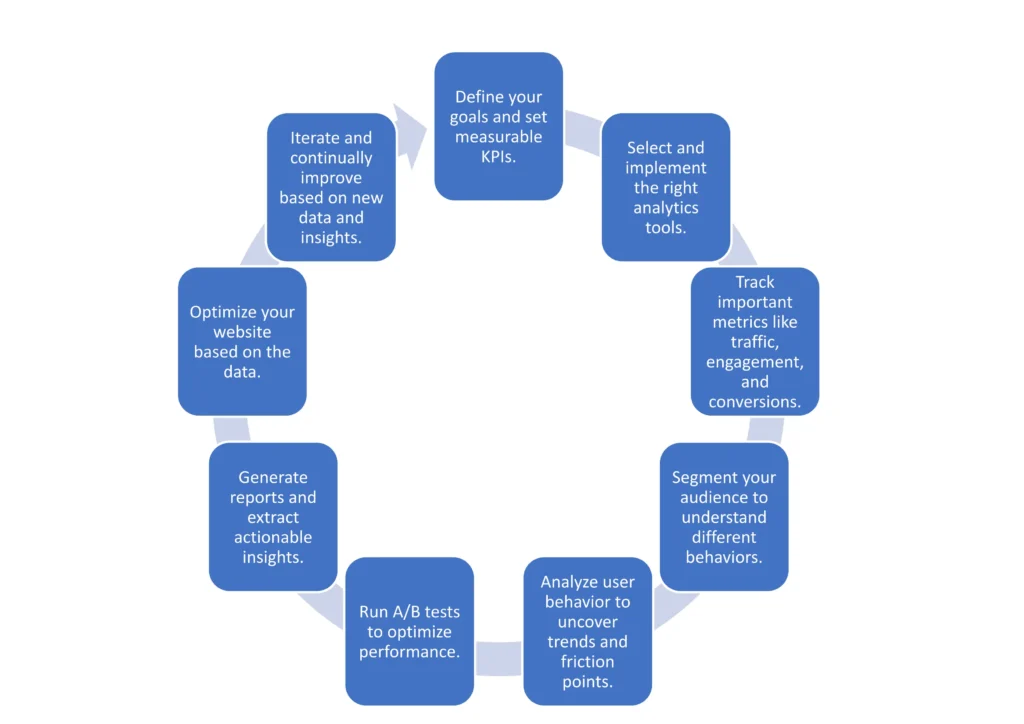
A Comprehensive Guide to Effective Web Analytics for Business Optimization
Real time application:
- An e-commerce store may combine attribution modeling, consumer feedback insights, and cross-device analytics to make its marketing strategies more effective. By watching how shoppers interact across websites and apps and smartphones or PCs, the team can put more budget into the touchpoints that actually drive results. Cross-device data guarantees that customers have a seamless experience regardless of which device they switch from, and live feedback enables them to improve the shopping experience while continuing, eventually boosting overall performance and ROI.
- A healthcare organization can rely on user behavior tracking and descriptive analytics to better understand how patients interact with their digital platforms. By studying activities like logging in, arranging appointments, or updating health information, they can notice patterns that actually matter. These insights help in improving the platform’s design, tailor communication to each patient’s needs, and strengthen engagement and retention—leading to better patient outcomes and overall satisfaction.