The Evolution of Development from Vibe Coding to Context Engineering
In the evolving of today’s digital acceleration, the curtain draws on vibe coding—a development style shaped by raw instinct, aesthetic infatuation, and untethered spontaneity. A new paradigm ascends: context engineering—an intricate, precision-crafted methodology rooted in behavior analytics, intent modeling, and adaptive automation. This shift redefines how digital systems are designed, no longer as artifacts of creative flair, but as finely-tuned extensions of user consciousness.
Vibe Coding: A Stylish Relic in Decline
Vibe coding once flourished in design-centric enclaves and prototyping havens. It thrived on emotive impulses, minimal structural rigor, and a penchant for flair over functionality. However, it often constructed castles of code on foundations of sand.
Within this methodology:
Developers lean on personal whims rather than empirical insights
Systems emerge with architectural frailty and low longevity
Decisions lack contextual scrutiny or real-world verification
While once ideal for experimentation and visual storytelling, this mode frequently gave rise to disjointed UX flows, latent bugs, and spiraling technical debt.
Context Engineering
Context engineering is the deliberate orchestration of digital environments that morph intelligently based on user attributes, behavioral telemetry, and environmental stimuli. It’s not about crafting what looks good—it’s about building what resonates with functional purpose.
The spine of this approach includes:
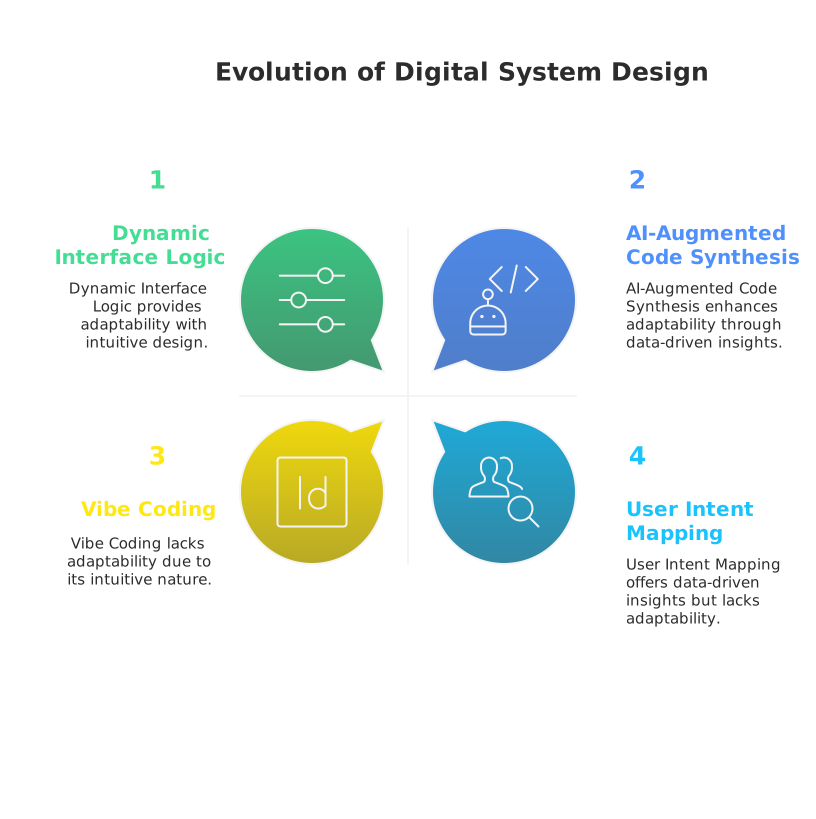
User Intent Mapping
Contextual Behavior Modeling
Semantic Input Analysis
Dynamic Interface Logic
AI-Augmented Code Synthesis
Engineers architect these systems not with guesses—but with data-borne empathy, aligning every feature with a user’s rationale and rhythm.
AI’s Pivotal Axis in Context Engineering
Artificial intelligence undergirds the evolution of context engineering. Its faculties:
Forecast behavioral patterns via longitudinal usage
Tailor interaction scaffolds in real-time
Reconfigure UI paradigms per session context
Consider a search feature laced with NLP—it mutates output based on past behavior, locale, device fingerprints, and intent heatmaps. AI transmutes static UI into kinetic cognition.
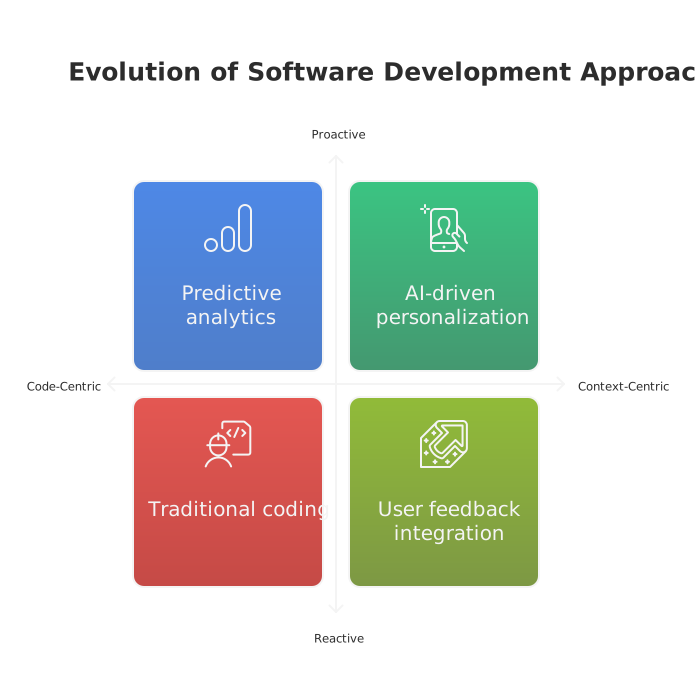
The Shift: From “Code First” to “Context First”
This conceptual pivot—from building blindly to building with intent—is more than a workflow tweak. It marks a philosophical migration. Engineers no longer ask “what can we build?” but “what should we build?”
Old-School Vibe Approach:
Toolchain obsession
Build-then-pray methodology
Design by hunch
New-School Context Protocol:
Start with situational mapping
Chart user narratives and pain cycles
Construct solutions from validated friction
The delta? Sharper alignment, reduced overhaul, and software that doesn’t just work—but fits.
Real-Life Use Cases: Context in Motion
Intelligent Learning Interfaces
Platforms like Coursera fine-tune content flow by gauging pace, device habits, engagement windows, and prior knowledge. Lessons emerge that sync with learning behavior, not just curriculum logic.
E-Commerce Intelligence Systems
Engines like Shopify adapt checkout interfaces, product banners, and pricing nudges based on micro-interactions and behavioral metrics—the result: conversion fluency.
Context-Aware Health Architectures
Patient platforms synthesize diagnostics, device telemetry, and condition history to manifest personalized wellness blueprints.
These use cases prove one truth: context breeds cognitive resonance, which translates into better business outcomes.
Merits of Context-Centric Development
Shifting from vibes to context unveils multi-faceted gains:
UX Precision
Interfaces respond like a mirror—not a billboard—offering paths that feel tailored, not imposed.
Efficiency in Engineering
Fewer wasted features. Tighter scope. Leaner delivery. Less code; more value.
Durable Architecture
Systems built around context are modular and adaptive—ready for change, instead of bracing against it.
Strategic Differentiation
In a saturated market, personalization powered by real-time logic is a competitive moat.
Rewiring Teams for Contextual Intelligence
To embed context deeply, organizations must reconfigure their DNA.
Poly-skilled Squads: Blend devs, behavioral analysts, UX architects, and AI modelers
Perpetual Discovery: Bake in feedback cycles, event analytics, and decision loops
Tooling Stack: Use Segment, FullStory, and GPT-model extensions to observe, predict, and morph interface behavior in vivo
The companies that operationalize context don’t just create interfaces—they foster connection.
Looking Forward: Systems That Feel
The digital environments of tomorrow won’t just display—they’ll perceive.
Expect:
Voice agents tuned to emotion, tone, and urgency
Apps that respond to ambient light, posture, or biometric shifts
Platforms that rewire structure based on your browsing tempo
The destination? Systems that breathe alongside us—fluid, cognitive, and anticipatory.
Final Reflection: Engineering Meaning
Vibe coding once ignited creative freedom. But in a world awash with behavioral signals and user diversity, improvisation alone is no longer sufficient.
Context engineering is not a trend—it’s a requirement. It brings order to chaos. Purpose to pixels, which means to mechanics.
The future belongs to builders who don’t just wield syntax—but sense.
They will sculpt digital realms where every click, every swipe, every scroll matters—because it was made with someone real in mind.
Market Mix Modeling (MMM) to gain data-driven insights into their marketing effectiveness. By quantifying channel contributions, measuring loyalty program impact, and uncovering cross-channel synergies, the retailer achieved a 14% increase
Boosting ROI by 35%, Cutting Inventory Costs by 25%, and Enhancing Customer Loyalty Retail Performance Analytics solution transformed a leading omnichannel retailer’s operations and profitability. Addressing challenges like fragmented data,
This case study explores how a multinational food manufacturer leveraged Food Customer Analytics to transform its operations, drive growth, and enhance customer engagement. By implementing a comprehensive data-driven approach encompassing
CASE STUDY: Data-Driven Telecom Analytics Boosting Revenue with Targeted Cross-Selling and Upselling for a Leading Telecommunications Provider Aiming for 15% Revenue Growth Data-Driven Telecom Analytics solution helped a leading telecommunications
Maximizing ROI and Repeat Customers for a Leading AthleisureData-Driven Campaign Effectiveness Measurement solution empowered a leading multinational Athleisure brand to maximize ROI and foster repeat customers. By developing a customer
CASE STUDY: Customer Segmentation in Banking Driving 45% Annual Growth for a Mid-Sized Regional Bank Through Personalized Strategies Customer Segmentation solution enabled a mid-sized regional bank to achieve 45% annual growth by moving